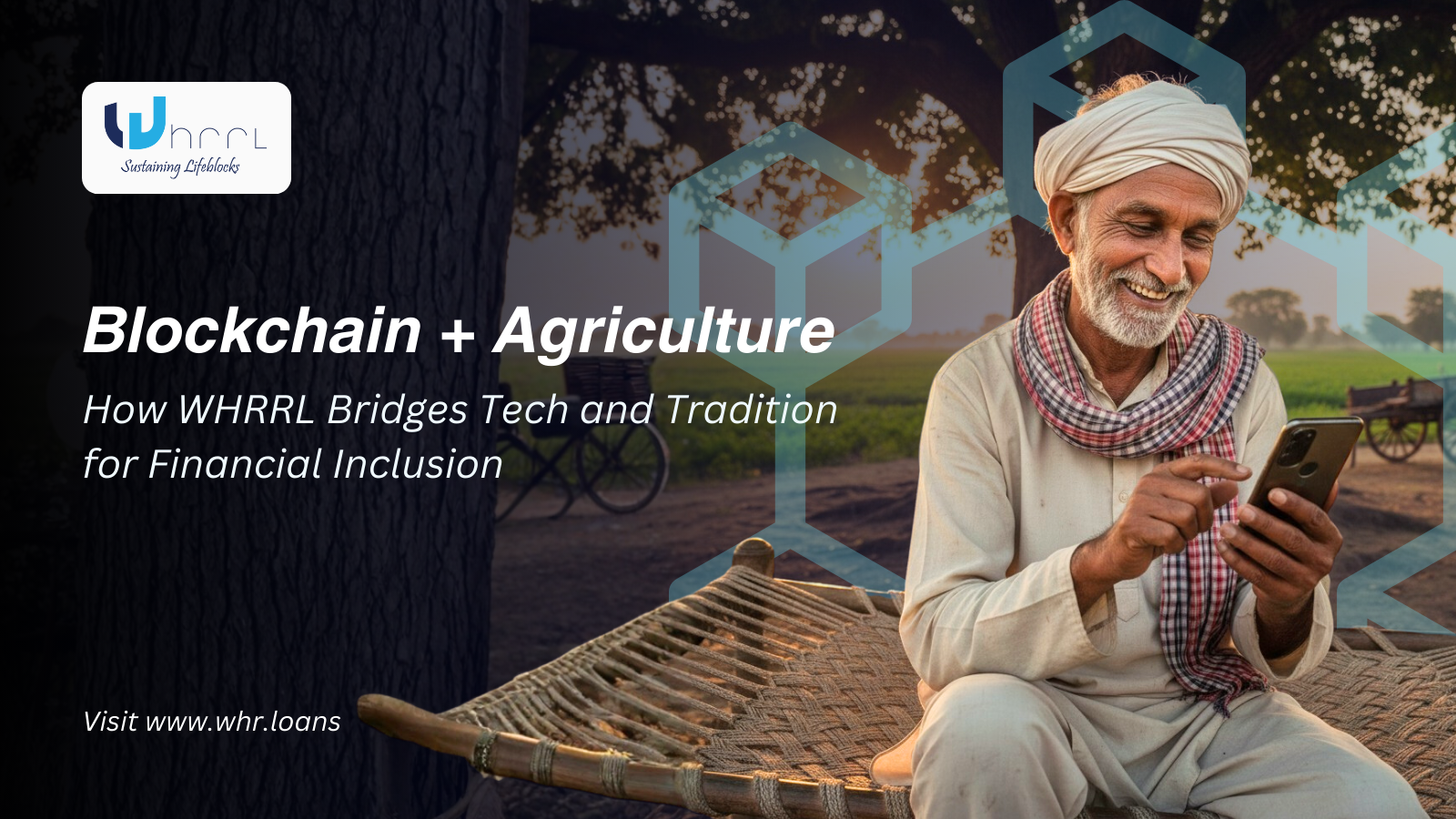
India's agricultural ecosystem is deeply rooted in tradition, yet it faces modern challenges limited access to formal credit, lack of transparency, delayed payments, and dependence on intermediaries. While farmers continue to rely on age-old practices like crop storage and seasonal selling, the financial systems around them have struggled to evolve. This is where WHRRL steps in, combining blockchain technology with traditional agricultural workflows to unlock true financial inclusion.
The Credit Gap in Traditional Agriculture
For decades, farmers have stored their produce in warehouses to wait for better market prices. However, despite having valuable crops safely stored, accessing loans against this produce has often been complex and inefficient. Manual paperwork, lack of trust between stakeholders, risks of duplicate receipts, and slow loan disbursement have kept many farmers outside the formal credit system.
Small and marginal farmers, in particular, face barriers such as lack of land titles or credit history, forcing them to rely on informal lenders at high interest rates. The problem has never been the absence of assets; it has been the inability to prove, verify, and monetize those assets efficiently.
WHRRL's Blockchain-Powered Solution
WHRRL modernizes the traditional warehouse receipt system by digitizing it on a secure blockchain infrastructure. Each warehouse receipt issued through WHRRL is tamper-proof, verifiable, and traceable in real time. This creates a single source of truth for farmers, warehouses, lenders, and regulators.
By ensuring that every receipt is unique and cannot be duplicated or altered, blockchain removes one of the biggest trust barriers in agricultural finance. Lenders gain confidence that the stored commodity genuinely exists, is insured, and has not been pledged elsewhere. As a result, loans can be approved faster and at more competitive interest rates.
Bridging Tradition with Technology
What makes WHRRL particularly impactful is that it does not disrupt traditional agricultural practices; it enhances them. Farmers continue to store crops in warehouses as they always have. The difference lies in what happens next. Once the produce is deposited, a digital warehouse receipt is generated and recorded on the blockchain. This receipt becomes a powerful financial instrument that farmers can use to access working capital.
This seamless blend of tradition and technology ensures that farmers do not need advanced technical knowledge. The complexity of blockchain remains in the background, while the benefits of speed, transparency, and security are experienced upfront.
Driving Financial Inclusion at Scale
WHRRL plays a critical role in expanding access to formal credit, especially for underserved communities. By transforming stored crops into reliable digital collateral, WHRRL enables banks and NBFCs to extend loans to farmers who were previously considered high-risk.
Faster loan processing reduces distress sales, allowing farmers to sell their produce when market prices are favorable. Improved liquidity also helps them invest in better inputs, storage, and farming practices, creating a virtuous cycle of productivity and income growth.
Transparency Across the Agri Value Chain
Beyond credit access, WHRRL strengthens the entire agricultural value chain. Real-time visibility into warehouse receipts improves regulatory oversight, reduces fraud, and enhances trust among stakeholders. Policymakers and financial institutions gain better data to design targeted interventions, while farmers benefit from a system that finally works in their favor.
Conclusion
WHRRL demonstrates how blockchain in agriculture can go beyond buzzwords to deliver real-world impact. By bridging time-tested agricultural practices with cutting-edge technology, WHRRL is building a more inclusive, transparent, and efficient rural finance ecosystem. As India moves toward a digital-first economy, platforms like WHRRL will be instrumental in ensuring that farmers are not left behind but instead are empowered to thrive.
